Lease Tab Insights
Data-driven perspectives on AI, leasing efficiency, and multifamily operations.
Why Lisa's answers…
In an industry where data changes daily, Lisa provides verifiable as-of dates for every insight, ensuring your leasing decisions are based on current market reality.
How Lisa cites…
In an era of AI-generated content, Lisa prioritizes transparency by citing her sources for every industry insight, ensuring property managers have the data they need to make informed decisions.
Lisa's compliance guardrails:…
In an era of automated leasing, knowing what an AI shouldn't say is just as important as what it can. We explore the essential compliance guardrails that keep Lisa focused on accuracy and Fair Housing safety.
Teaching Lisa fair-housing-safe…
Ensuring AI leasing assistants remain compliant with federal and local fair housing laws requires more than just basic programming; it demands rigorous, ongoing oversight.
Entrata plus an…
Learn how to maintain data integrity and operational efficiency when pairing AI leasing receptionists with the Entrata ecosystem.
Buildium users: how…
For small-to-mid-size multifamily operators using Buildium, 24/7 call coverage is no longer a luxury reserved for institutional giants. Learn how to bridge the gap between manual lead management and automated, round-the-clock responsiveness.
Adding an AI…
Learn how to evaluate third-party AI integrations for AppFolio to bridge gaps in lead response and automate complex leasing workflows.
Using AI call…
Learn how to bridge the gap between your Yardi property data and AI call-answering tools to ensure every prospect inquiry is captured and converted.
What percentage of…
With nearly half of all leasing calls going unanswered, US multifamily operators are losing prospects to competitors who prioritize 24/7 responsiveness.
Multifamily benchmark data shows over 60% of after-hours calls go unanswered, costing thousands in lost leases. Here is how modern operators close the gap.
AI adoption trends…
As high rents and inbound seasonal migration put immense pressure on South Florida on-site teams, Miami operators are shifting away from lifeless voicemail queues to real-time AI leasing receptionists.
missed-call costs and…
In an increasingly competitive Los Angeles rental market, static lead forms and missed calls carry steep carrying costs. Here is how active, real-time response protects NOI.
AI leasing assistants…
In New York City's ultra-tight rental market, static property management software creates costly operational bottlenecks. Here is why real-time, responsive leasing workflows are essential for NYC operators.
AI adoption among…
With San Diego vacancy rates hitting record highs, property operators can no longer afford the 'dead' silence of missed calls and static lead forms.
AI leasing receptionists…
With Nashville multifamily vacancy hovering between 8.5% and 10.8%, operators cannot afford missed calls or dead software menus. Discover how real-time, responsive leasing tools protect occupancy in a competitive Sunbelt market.
With Chicago's multifamily vacancy hovering near 4.7% and Class A rents at $2,774, institutional operators like Pinnacle/Cushman & Wakefield are modernizing static leasing workflows with responsive AI.
renewal automation and…
Discover how mixed-use multifamily operators in Greenbelt, MD eliminate friction, capture high-intent prospects, and drive lease renewals with responsive, real-time leasing workflows.
Seattle multifamily teams face tight competition and tech-savvy renters who call outside office hours. Here is why lifeless leasing software costs you leases, and how real-time AI reception bridges the gap.
With Houston's apartment vacancy hovering around 12% and supply high across the Sun Belt, operators can't afford unanswered inquiries. Here is how modern leasing teams eliminate dead response channels.
With Sacramento multifamily vacancy hovering near 6.7% and concessions elevated, operators managing institutional portfolios need dynamic leasing workflows that capture leads in real time.
leasing efficiency and…
In San Mateo's high-stakes rental market, multifamily operators must replace static portals and missed calls with responsive, live workflows to protect revenue and retention.
AI leasing tools…
Highlands Ranch multifamily operators face rising submarket vacancies and high turnover. Here is how replacing lifeless software with real-time AI leasing keeps prospects engaged.
Phoenix property managers face rising rental vacancies and geographically dispersed portfolios. Here is why static property management tools fail—and how dynamic AI response keeps leasing moving.
In Dallas-Fort Worth's competitive rental landscape, static property management software leaves leads to die on voicemail. Here is how real-time responsiveness bridges SFR operations and renewals.
In Arlington's competitive rental submarkets like Ballston and Crystal City, static lead forms and missed calls cost operators thousands in lost leases from high-earning relocating professionals.
In tight urban multifamily markets like Chicago, unanswered calls silently bleed thousands in potential revenue. Here is how modern operators turn lifeless lead workflows into real-time leasing conversions.
With Memphis vacancy hovering near 13.6% and average rents at $1,250, multifamily teams cannot afford static software, missed calls, or lagging renewal workflows.
how Greystar (headquartered…
In tight-margin and high-vacancy markets like Charleston, missed calls cost operators thousands in lost pipeline. Here is how modern leasing desks replace static software with responsive, real-time workflows.
In St. Louis's steady rental market, property managers are replacing static voicemail and unresponsive lead forms with real-time AI leasing receptionists to capture every prospect.
Cincinnati property managers are overcoming the limitations of static leasing software by adopting AI receptionists that turn missed calls into real-time leasing opportunities.
Kansas City operators are balancing tight vacancy rates with high demand. It is time to move beyond static, dead-end leasing tools and embrace real-time responsiveness.
With Fort Worth's multifamily market navigating a competitive landscape, property operators must shift from static, manual workflows to real-time, responsive leasing to capture every lead.
missed calls and…
With Indianapolis rental days on market climbing to 55 days, property managers must eliminate the dead zones of missed calls and static forms to capture high-intent leads in real time.
As Jacksonville's population surpasses one million, multifamily operators must move beyond static lead forms to capture demand in a competitive, high-supply environment.
Dallas multifamily operators are navigating a complex market with elevated vacancy and high turnover. Discover how shifting from static, dead-end software to a living, responsive leasing motion can reclaim lost leads and stabilize occupancy.
With Philadelphia vacancy rates shifting and administrative costs rising, property managers are losing thousands to missed calls and static lead forms.
With San Antonio currently holding the highest multifamily vacancy rate in the U.S., property managers are turning to AI to replace static lead forms with responsive, real-time leasing interactions.
Minneapolis property managers face a tightening market and rising operational costs; shifting from static lead forms to responsive AI helps capture demand without increasing headcount.
where AI fits…
As Denver faces a 16-year high in apartment vacancy, property managers are turning to AI to transform static software into responsive, real-time leasing engines.
With Houston vacancy rates hitting record highs, property managers must move beyond static lead forms to capture demand in real-time.
As Dallas–Fort Worth operators face rising vacancy rates and increased competition, AI-driven leasing tools are becoming essential for capturing leads in real-time.
With Portland vacancy rates hovering near 6% and rent growth remaining flat, multifamily operators are prioritizing lead response times to maintain stabilized occupancy.
With Seattle's average rents exceeding $2,000 and vacancy rates tightening, property managers cannot afford the 60% industry-average missed call rate that drains potential NOI.
As Las Vegas vacancy rates stabilize near 5.9%, property operators are turning to AI leasing receptionists to capture demand from the city's tourism-heavy workforce.
With Raleigh–Durham vacancy rates stabilizing near 11.8% and concessions becoming standard, property managers must leverage automation to capture high-intent leads and maintain steady renewal rates.
As Orlando's vacancy rates hover around 8.4%, property managers must eliminate missed calls to remain competitive during the peak leasing season.
With Tampa Bay facing record-high vacancy rates and a massive supply pipeline, multifamily operators are turning to AI to capture every lead and reduce the high cost of missed calls.
As Atlanta's multifamily market navigates a record supply surge and stabilizing vacancy rates, AI leasing assistants offer a data-driven way to capture leads and protect NOI.
the cost of…
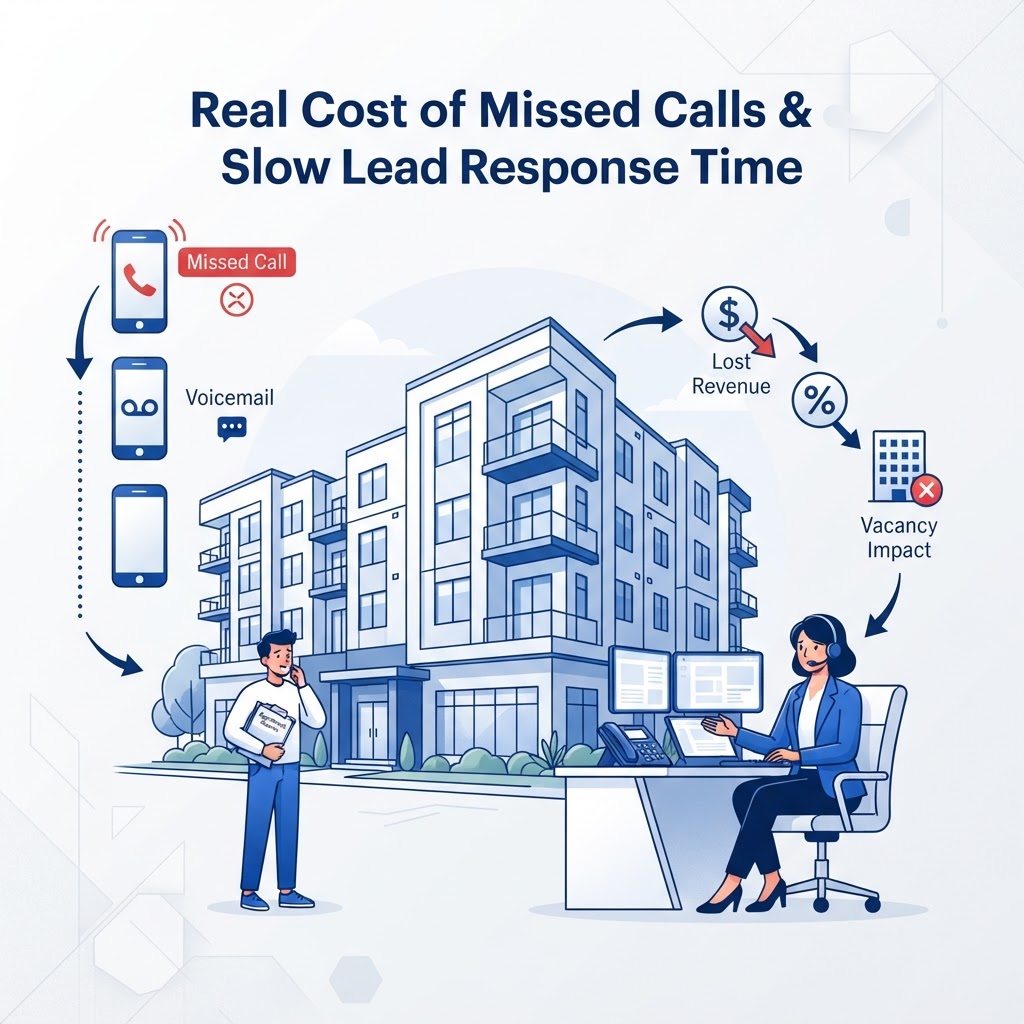
Slow lead response times and missed calls represent a measurable loss in Net Operating Income through increased vacancy and wasted marketing spend.
multifamily market trends…
As record-high supply hits major US metro areas, property managers must pivot from rent growth strategies to operational precision and lead capture to maintain NOI.