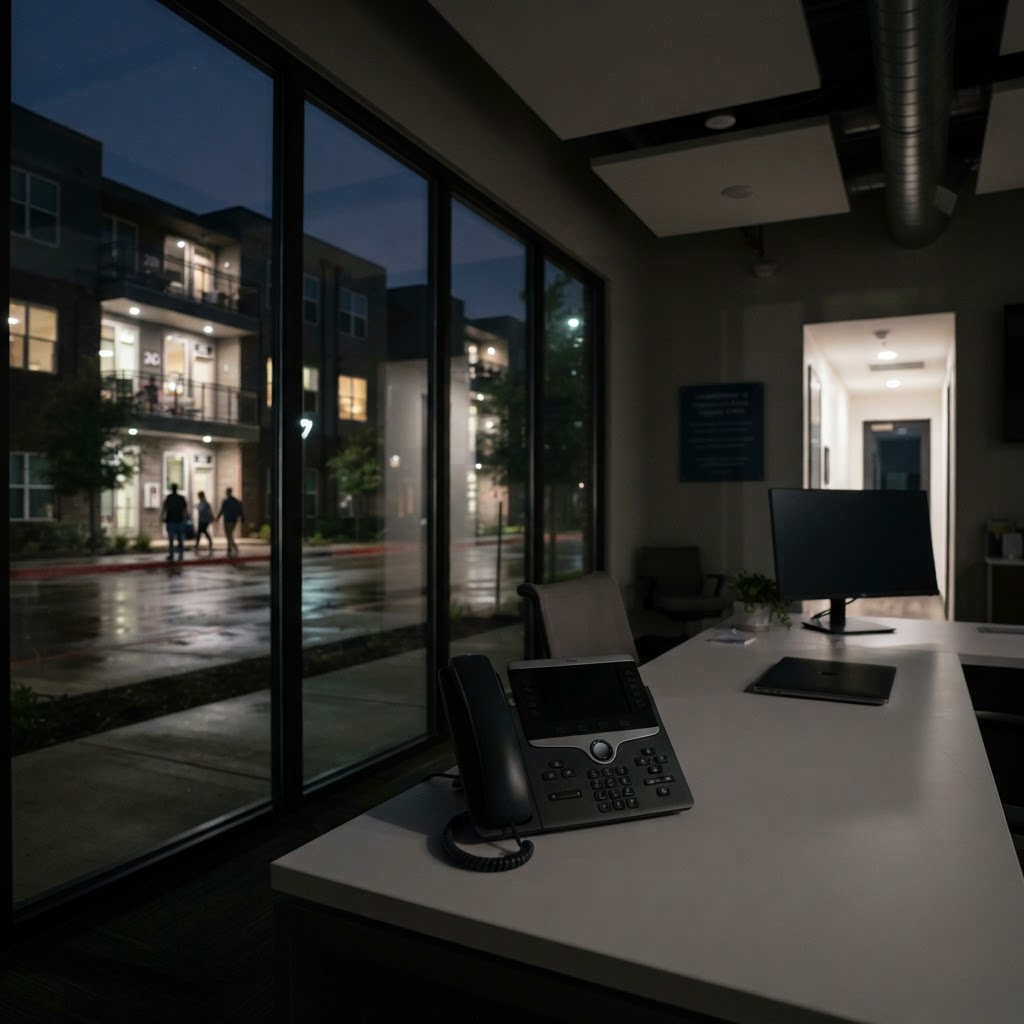
For United States multifamily teams, phone inquiries remain the highest-intent channel for acquiring prospective residents. Yet industry benchmarks show a persistent operational blind spot: when the leasing office closes at 5:00 PM or 6:00 PM, prospect discovery does not stop.
Understanding the volume of after-hours leasing inquiries and what happens when they go unanswered helps operators pinpoint precisely where marketing dollars slip through the cracks.
The Numbers Behind After-Hours Missed Calls
Cross-industry property management studies and analytics from firms like Digible and Boom Sourcing reveal that 60.8% of inbound calls to multifamily communities go unanswered, with roughly 65% of overall calls arriving outside typical business hours.
Additional research highlights three critical behavioral trends across US rental markets:
- Prospects do not leave messages: Data from LeaseHawk indicates that roughly 87% of callers who do not reach a live person hang up without leaving a voicemail. Instead of waiting for a callback the next morning, 62% immediately call another community on their shortlist.
- Speed determines the lease: According to research published by Apartments.com, 78% of prospective renters sign an agreement with the community that responds to their initial inquiry first. The average apartment search has compressed to just 27 days, meaning decision windows are shorter than ever.
- The financial downside is steep: Software provider RentManager estimates that a single missed leasing call costs an average of $1,000 in delayed or lost rental revenue, not including extended vacancy exposure.
Why Traditional After-Hours Coverage Falls Short
Historically, operators have attempted to bridge this gap with call centers or outsourced answering desks. While this ensures an answered ring, outsourced teams frequently lack current inventory details, cannot confirm specific pet policies, and often cannot schedule tours directly on the onsite team’s calendar.
When an after-hours caller only receives an offer for a next-day callback, the lead remains vulnerable to competing properties that offer immediate engagement.
The Four-Step Action Plan to Capture Off-Hours Leads
To convert evening and weekend demand without burning out onsite staff, operators can deploy a structured framework:
- Audit Call Flow Timestamps: Review phone carrier logs and tracking numbers to identify when call spikes occur. Most properties see significant surges between 6:30 PM and 9:00 PM on weekdays and across Sunday afternoons.
- Provide Real-Time Scheduling at First Contact: A prospective renter calling at 8:00 PM wants to confirm floor plan eligibility and reserve a tour slot. Modern voice systems must directly coordinate with the property management system to confirm available time windows instantly.
- Implement Immediate Two-Way Text Handoffs: Surveys by Multifamily Executive reveal that nearly 80% of renters prefer communicating via text or chat. If an inquiry drops or concludes, automated confirmation texts with property maps and unit details anchor the renter's interest.
- Establish Strict Morning Callback Workflows: For nuanced inquiries that require onsite human review, tag after-hours lead records with move-in dates and budgets so leasing agents can prioritize outbound contacts by 9:30 AM the following morning.
Closing the Coverage Gap
Capturing after-hours leasing demand does not require putting on-call burdens on site teams or risking lost marketing attribution. Intelligent solutions like Lease Tab handle every incoming prospect call with precision, answering questions accurately and securing booked tours around the clock.