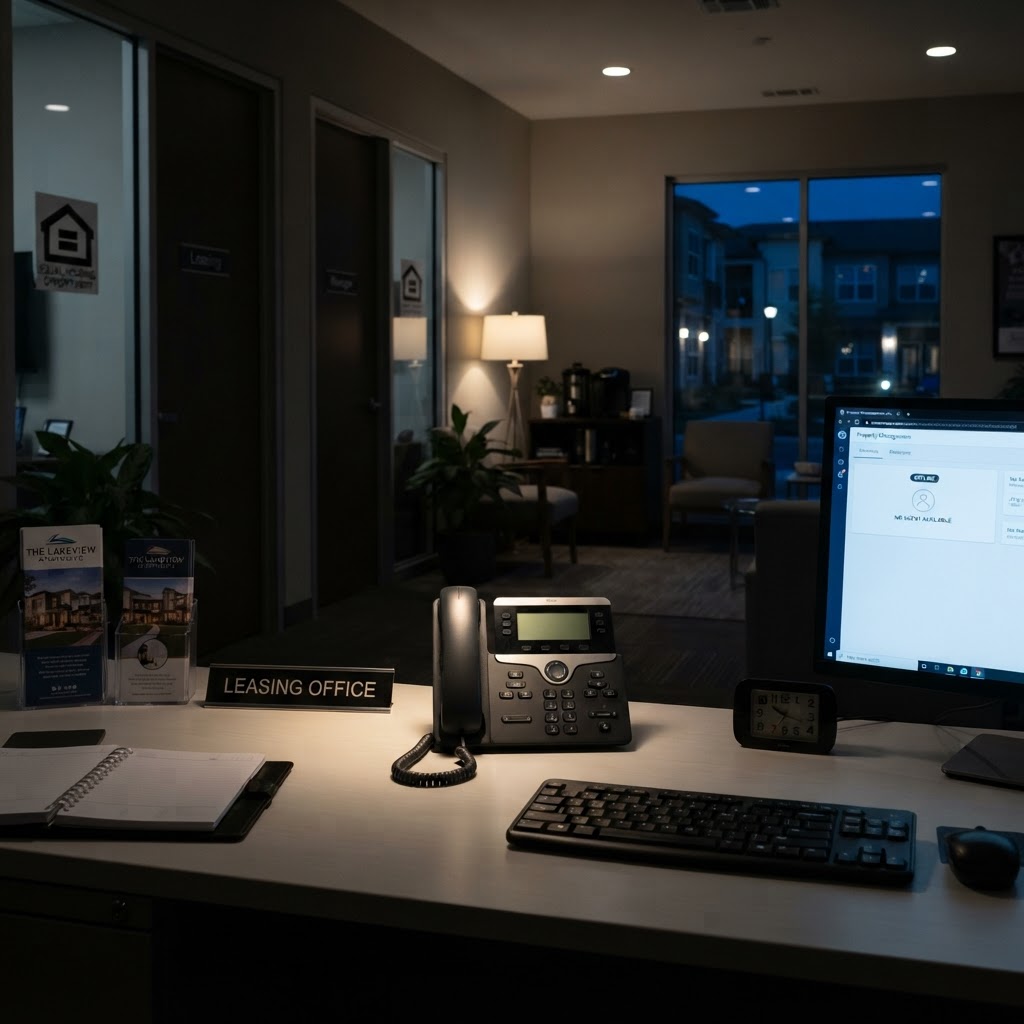
In the current US multifamily landscape, the phone remains a primary tool for prospective renters, yet it is also the most significant point of failure for property management teams. Industry data indicates that, on average, nearly 49% to 60% of all inbound leasing calls go unanswered [1, 2, 5]. When you consider that the average apartment hunt now lasts just 27 days, this lack of availability creates a massive friction point that drives prospects directly to your competitors [4].
The Reality of the After-Hours Window
Many operators view the leasing office as a 9-to-5 operation, but renter behavior tells a different story. A significant portion of inquiry volume occurs after traditional business hours, when onsite teams are off-site or focused on resident services. When a prospect calls during these times and reaches a dead end, the outcome is predictable: 87% of renters will not leave a message [4]. They simply move on to the next property on their list.
This isn't just a minor inconvenience; it is a direct hit to your occupancy strategy. With national turnover rates hovering around 47.5%, the pressure to maintain consistent lead flow is higher than ever [7]. Every missed call represents a marketing dollar wasted and a potential lease lost to a property that provides an immediate, helpful response [4].
Moving Beyond Manual Constraints
For years, the industry relied on manual follow-up or expensive, inconsistent call centers to bridge this gap. However, these methods often lead to fragmented communication and delayed responses that frustrate modern renters who expect instant gratification [9]. The shift toward automated, intelligent assistants is not about replacing the leasing team; it is about augmenting their capacity to handle high-volume inquiries without burning out staff [8, 10].
By implementing systems that can handle inquiries across phone, chat, and email simultaneously, operators ensure that every lead is captured, qualified, and scheduled for a tour regardless of the time of day [9, 10]. This level of responsiveness is no longer a luxury—it is a baseline expectation for the modern renter [6].
Strategic Implementation
To address this, property managers should focus on three key areas:
- Centralized Lead Capture: Ensure all inquiries, whether from Zillow, your website, or a direct phone call, flow into a single CRM to prevent data silos [10].
- Immediate Engagement: Use automated tools to provide instant, accurate answers to common questions like pricing, availability, and pet policies [9].
- Performance Tracking: Regularly audit your missed-call rates to identify specific times of day where your team is most overwhelmed and needs additional support [6].
By integrating Lease Tab into your existing workflow, you can ensure that your leasing desk remains responsive and efficient, turning every inquiry into a meaningful connection.