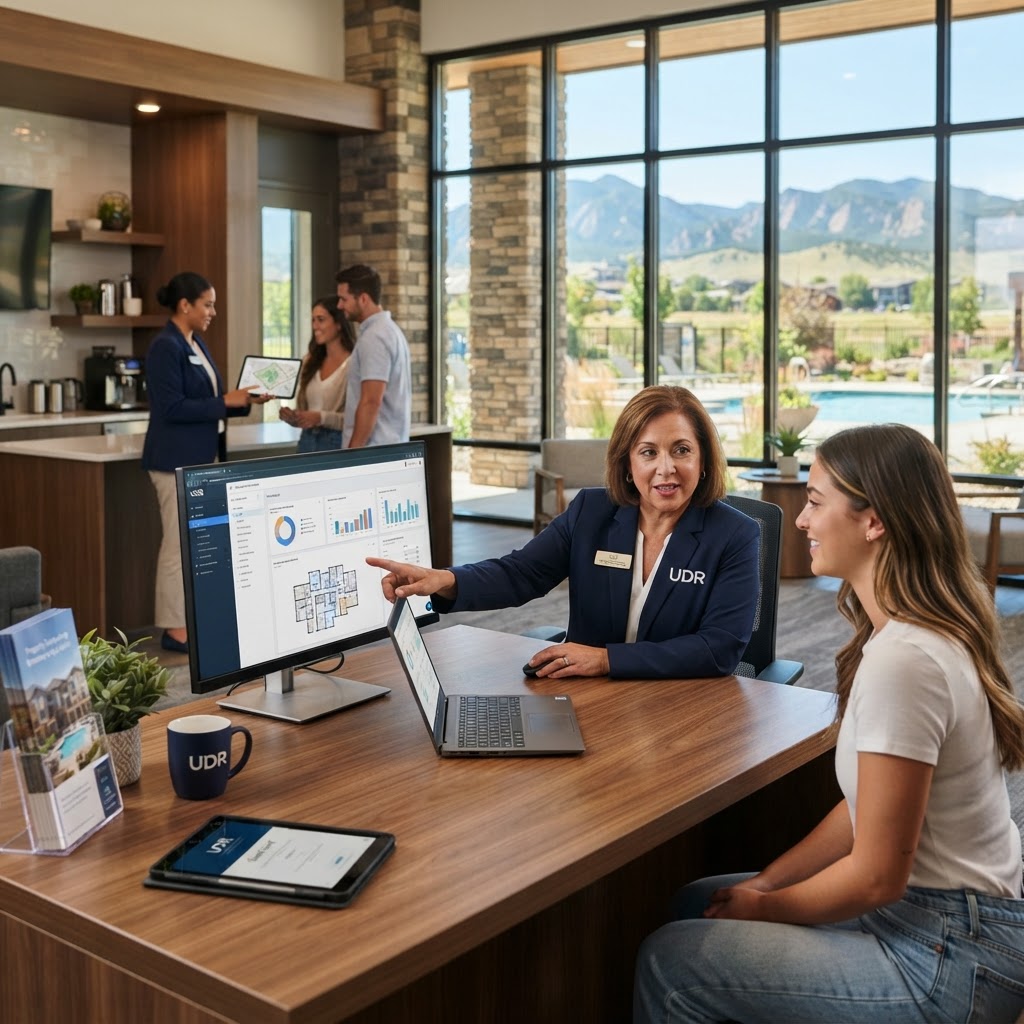
For multifamily operators in Highlands Ranch, Colorado, managing high-turnover communities has become a far tighter operational balancing act. With submarket vacancy across Highlands Ranch and Lone Tree hovering around 7.3% according to Colliers multifamily research, and average area rents ranging between $1,849 and upwards of $3,100 per month as reported by Apartments.com and Zillow rental market data, every vacant day carries a heavy cost. An empty unit left sitting unleased for even a week or two bleeds hundreds of dollars in lost net operating income.
Yet on-site leasing teams—frequently juggling corporate guidelines, resident move-outs, unit turns, and touring schedules—remain trapped in a structural bind. The core failure is not a lack of effort; it is that conventional property management stacks are full of lifeless, static touchpoints.
The Problem with Static Leasing Stacks
When a prospective renter discovers an institutional community in Douglas County, their journey often hits immediate friction:
- Static web forms that route inquiries into an unmonitored queue.
- Generic phone trees that prompt callers to leave a voicemail after hours.
- Rigid scheduling portals that cannot answer nuanced questions about parking, pet fees, or move-in timelines.
Leasing is inherently dynamic. It is a live prospect calling on their evening commute down C-470, a real-time question about school boundaries in the Douglas County R-1 district, or an application status waiting to advance. When prospective residents encounter a voicemail box, industry benchmarks show that over half will not leave a message—they simply call the next community down the road.
High-turnover communities exacerbate this issue. On-site staff are pulled into maintenance handoffs, move-out inspections, and resident relations, while software sits passive, waiting for a human to manually log entries and return voicemails. By the time a leasing agent retrieves a missed inquiry, the lead has gone cold.
Transitioning from Static Software to Real-Time Engagement
What modern operators require is a shift from dead software to a leasing operation that feels alive. Instead of storing data passively, operational systems must interact the second an inquiry occurs.
An AI leasing receptionist changes this dynamic by converting missed touchpoints into active conversations. When an inquiry comes in—whether at 2:00 PM during a packed tour schedule or at 8:00 PM after the office has closed—it is answered instantly. The platform carries natural, property-specific conversations: answering questions about floor plans, quoting current lease terms, pre-qualifying the prospect, and scheduling a self-guided or in-person tour right on the calendar.
Crucially, workflows do not pause. Prospect records, tour schedules, and pipeline statuses update instantly behind the scenes, eliminating the manual data entry that consumes up to 30% of a leasing specialist's day.
In competitive southern metro Denver submarkets where inbound migration from tech and financial corridors continues to drive demand, responsiveness directly dictates conversion. Platforms like Lease Tab bring this level of responsiveness to on-site operations, keeping your leasing workflow active and conversational every hour of the day.