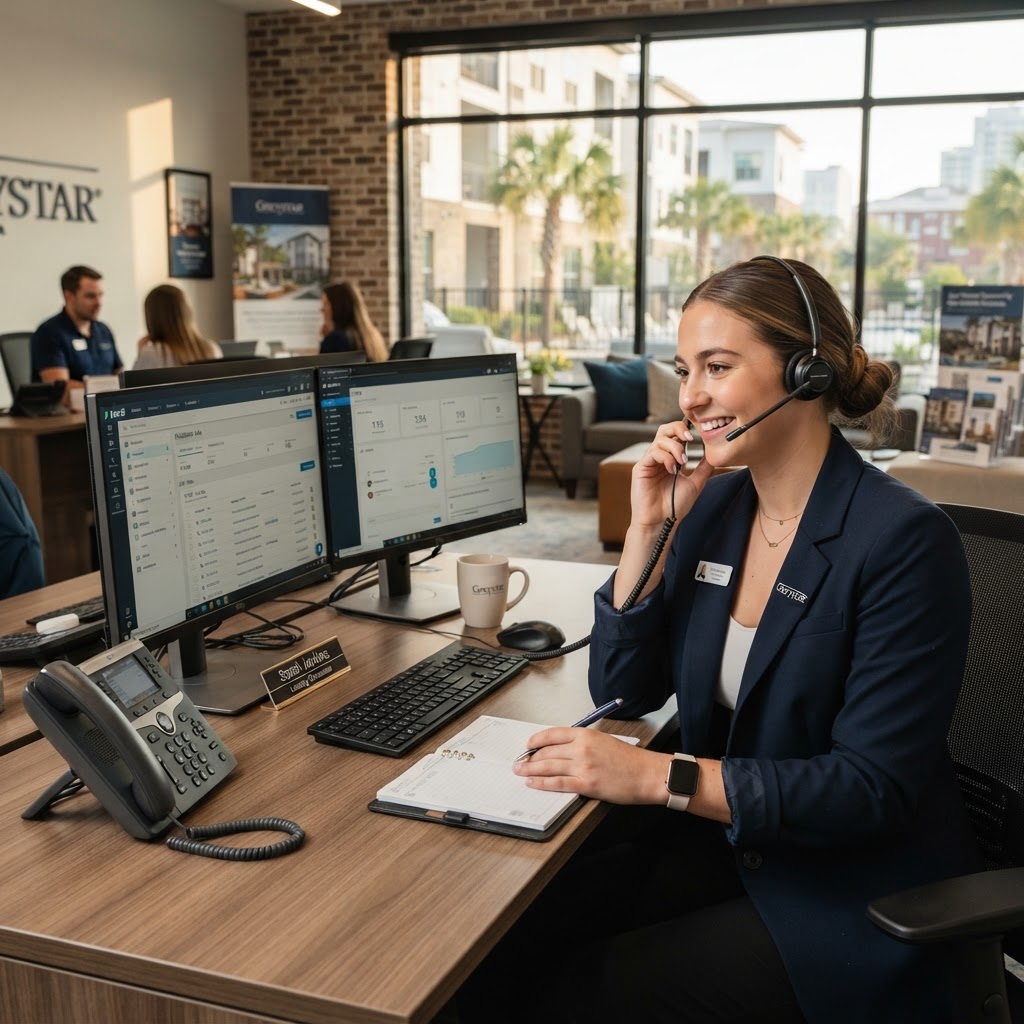
Operating multifamily communities at scale demands meticulous attention to operational leakage. While headquartered in Charleston, South Carolina, enterprise operators like Greystar oversee hundreds of thousands of doors nationwide—navigating markets defined by intense local competition, softening concessions, and supply growth.
Here in the Charleston metro, the stakes are obvious. High delivery volumes across submarkets like Daniel Island and North Charleston have pushed local rental vacancies into double digits, with market-level vacancies reported around 12.8%. When vacancies climb and prospective tenants face an abundance of Class A options, the leasing cycle is unforgiving. An inquiry that goes unanswered isn’t postponed—it moves directly to the competing community down the street.
Yet across the rental industry, the standard operating stack remains fundamentally lifeless. Portfolios deploy enterprise PMS platforms paired with rigid interactive voice response (IVR) phone trees, automated contact forms, and general voicemail mailboxes. Industry benchmarks consistently show that up to 30% to 40% of inbound leasing calls to site offices go unanswered during peak hours or after 6:00 PM. In a metro where average rents range from $1,800 to over $2,400 per month, losing two signed leases a month to a dead voicemail queue amounts to roughly $50,000 in lost annual net operating income per property. Multiplied across a nationwide footprint, missed calls quietly become a multi-million-dollar cost center.
The real issue is not staff bandwidth; it is that traditional leasing tools are dead ends. Static web forms sit in inboxes waiting for manual sorting. Phone prompts force high-intent callers to navigate impersonal menus, only to leave a recording in an unmonitored mailbox.
Leasing does not happen in static batches. It happens in living moments: a relocating engineer phoning at 7:30 PM after a shift to ask about pet policies, a live tour request coordinating around work hours, or a prospect wanting to verify a concession before paying an application fee. When software is frozen in time, leasing agents spend their mornings playing phone tag and triaging missed call logs rather than touring qualified prospects.
Cutting missed-call costs across distributed desks requires eliminating this deadness. Instead of letting inquiries sit dormant in a database, modern operators need systems that move in real time. An intelligent leasing receptionist transforms inbound communications from a dead-end mailbox into an active conversation. By picking up every call on the first ring, understanding natural voice context, answering hyper-local questions, and advancing prospect status directly within the CRM, the leasing pipeline stays continuously in motion.
Instead of leaving high-value leads stranded in lifeless software queues, Lease Tab keeps the leasing desk responsive and alive the moment a prospect reaches out.