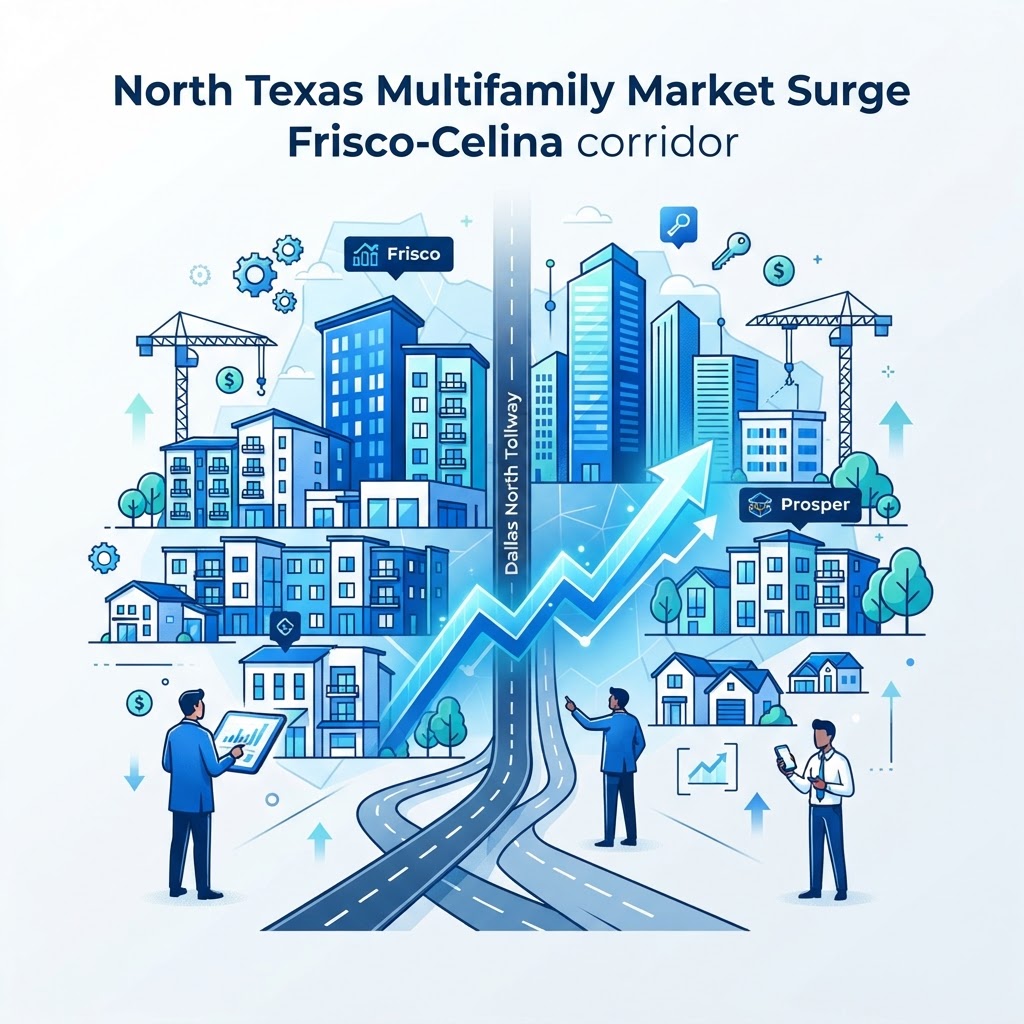
The North Texas corridor stretching from Frisco through Prosper and into Celina remains one of the most active multifamily development zones in the United States. Driven by corporate relocations and a population shift toward the northern suburbs, Celina alone has seen its population triple since 2010. However, this growth brings a specific set of challenges for property owners: a massive influx of new inventory and an increasingly competitive landscape for qualified renters.
The Inventory Influx and Occupancy Pressures
According to recent market reports, the Dallas-Fort Worth metroplex lead the nation in apartment deliveries in 2023 and 2024, with Frisco and the surrounding areas accounting for a significant percentage of those units. While demand remains steady, the surge in supply has pushed regional vacancy rates toward the 9% mark. In a market where renters have dozens of new-construction options within a five-mile radius, the window to capture a lead is narrower than ever.
Industry data suggests that approximately 43% of leasing inquiries go unanswered during peak business hours, and that number climbs significantly after 6:00 PM. In a high-rent market like Frisco, where a one-bedroom unit often exceeds $1,700, a single missed lead represents thousands of dollars in potential annual contract value. When prospects are met with a voicemail instead of a person or an immediate booking tool, they rarely leave a message; they simply move to the next property on their list.
Reducing the Cost of Manual Busywork
For many management teams in the North Texas market, the bottleneck isn't a lack of interest, but a lack of bandwidth. Leasing offices are often bogged down by 'manual busywork'—repetitive inquiries regarding pet policies, parking availability, or basic unit pricing. These queries, while necessary, prevent onsite staff from focusing on high-value tasks like touring qualified prospects or managing resident retention.
To maintain a competitive edge in the Celina-Prosper-Frisco submarket, owners are shifting their focus toward operational efficiency. This means moving away from the traditional model of 'catching up' on voicemails and toward a system of 24/7 lead engagement. By automating the top-of-funnel interactions, properties can ensure that every inquiry is answered instantly, questions are resolved, and tours are scheduled without human intervention.
Data-Driven Lead Capture
The transition toward automated leasing reception is not about replacing the human element, but about ensuring the human element is available when it matters most. For example, an AI-driven system can handle the 70% of calls that are routine inquiries, leaving the leasing agent free to close the lease with a prospect who has already been qualified and scheduled for a tour. This approach reduces the 'cost per lease' by maximizing the efficiency of the existing onsite team and ensuring no marketing dollars are wasted on missed calls.
As the North Texas market continues to mature, the properties that succeed will be those that prioritize immediate responsiveness and eliminate the friction of manual lead management, a standard that Lease Tab helps property managers achieve through intelligent, 24/7 inquiry handling.