The Raleigh–Durham multifamily market is currently defined by a paradox of high demand and significant supply-side pressure. As the third fastest-growing big city in the U.S., Raleigh continues to see robust net migration, with approximately 20,000 people moving to Wake County annually according to WRAL News. However, this growth has been met by a massive wave of new deliveries. Recent data from Lee & Associates indicates that the vacancy rate in the Triangle has tightened slightly to 11.8%, while average asking rents have climbed to approximately $1,558 per unit.
For property managers in the Research Triangle, this environment requires a shift from passive order-taking to aggressive operational efficiency. With 52% of Raleigh listings now offering concessions to attract tenants, as reported by Unicorn Rentals, the cost of a missed lead has never been higher. When the average unit takes 28 days to lease, a single missed call or a delayed response to a showing request can result in thousands of dollars in lost effective rent.
The High Cost of Manual Leasing
In a market where international migration and high-earning tech professionals—drawn by Apple’s $1 billion campus and Meta’s data center—are fueling demand, leasing teams are often overwhelmed by volume. Much of this volume is "manual busywork": answering repetitive questions about pet policies, parking, or square footage. When onsite teams are bogged down by these inquiries, they lose the ability to focus on high-value tasks like closing tours or managing resident relations.
Furthermore, the leasing window in the Triangle is no longer 9-to-5. With a population growing at 1.61% annually and a steady influx of out-of-state renters, inquiries often arrive after hours. If a prospect cannot get an immediate answer or schedule a tour at 8:00 PM, they move to the next listing in a competitive market where supply remains elevated.
Prioritizing Retention and Renewal
While new leases are critical, retention is the most efficient way to protect NOI. Currently, lease renewal rates in the region have increased by 1.6%, with 56.7% of renters choosing to stay in place to avoid the costs of moving in a fluctuating market. Automation plays a vital role here by ensuring that renewal offers are sent timely and that resident concerns are addressed before they lead to turnover.
Reducing friction in the renewal process is essential, especially as maintenance costs have risen by 0.88% locally. By automating the initial touchpoints of the renewal cycle, managers can identify at-risk tenants earlier and dedicate human intervention where it is most needed.
Bridging the Gap with AI
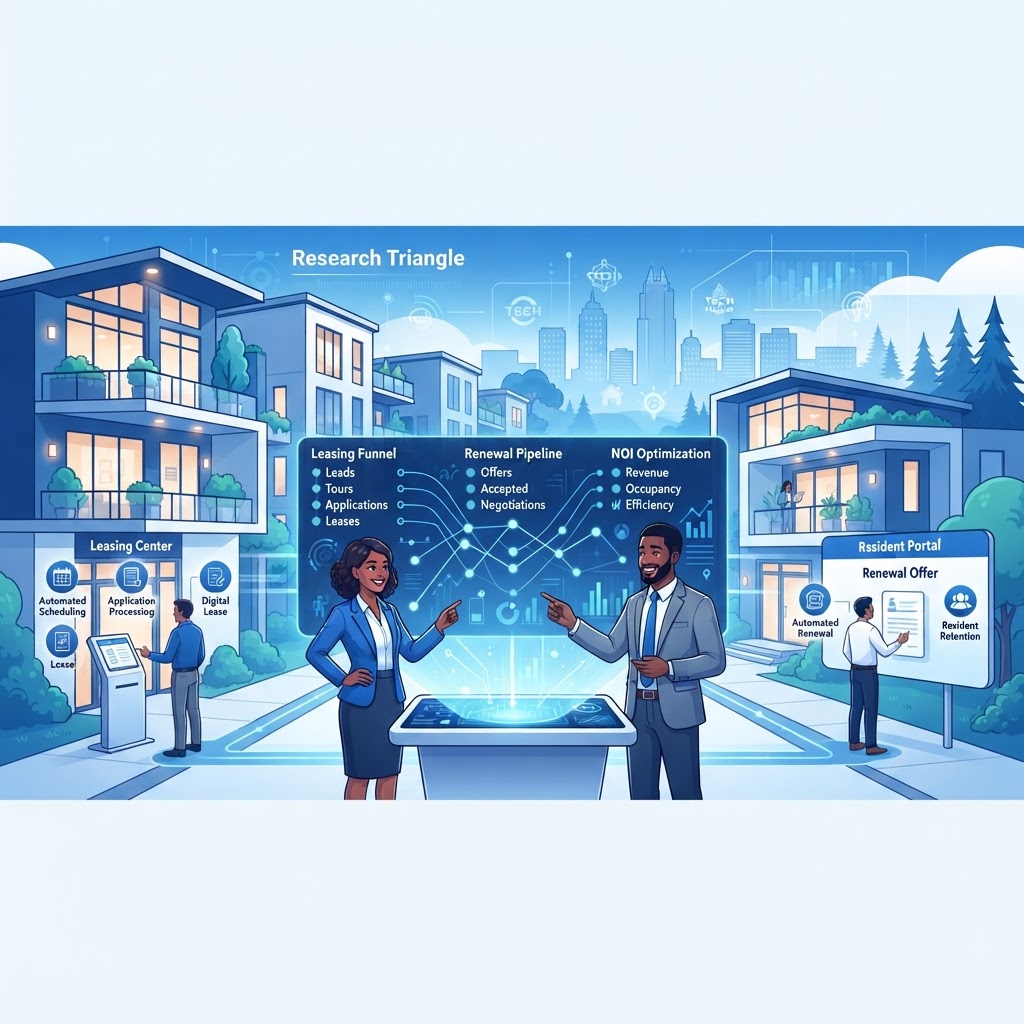
To navigate these supply-side pressures, Raleigh–Durham operators are increasingly moving away from traditional call centers and toward AI-driven receptionists. Unlike human-staffed services that may have wait times or lack specific property knowledge, an AI receptionist provides instant, accurate data regarding availability and pricing. This ensures that every lead is captured and every showing is scheduled without adding to the onsite team's workload.
Implementing these tools allows Triangle managers to maintain a lean operational profile while providing the high-touch experience that modern renters expect. Lease Tab provides an AI leasing receptionist designed to handle these high-volume interactions, ensuring your team never misses a prospect in the competitive Raleigh–Durham market.