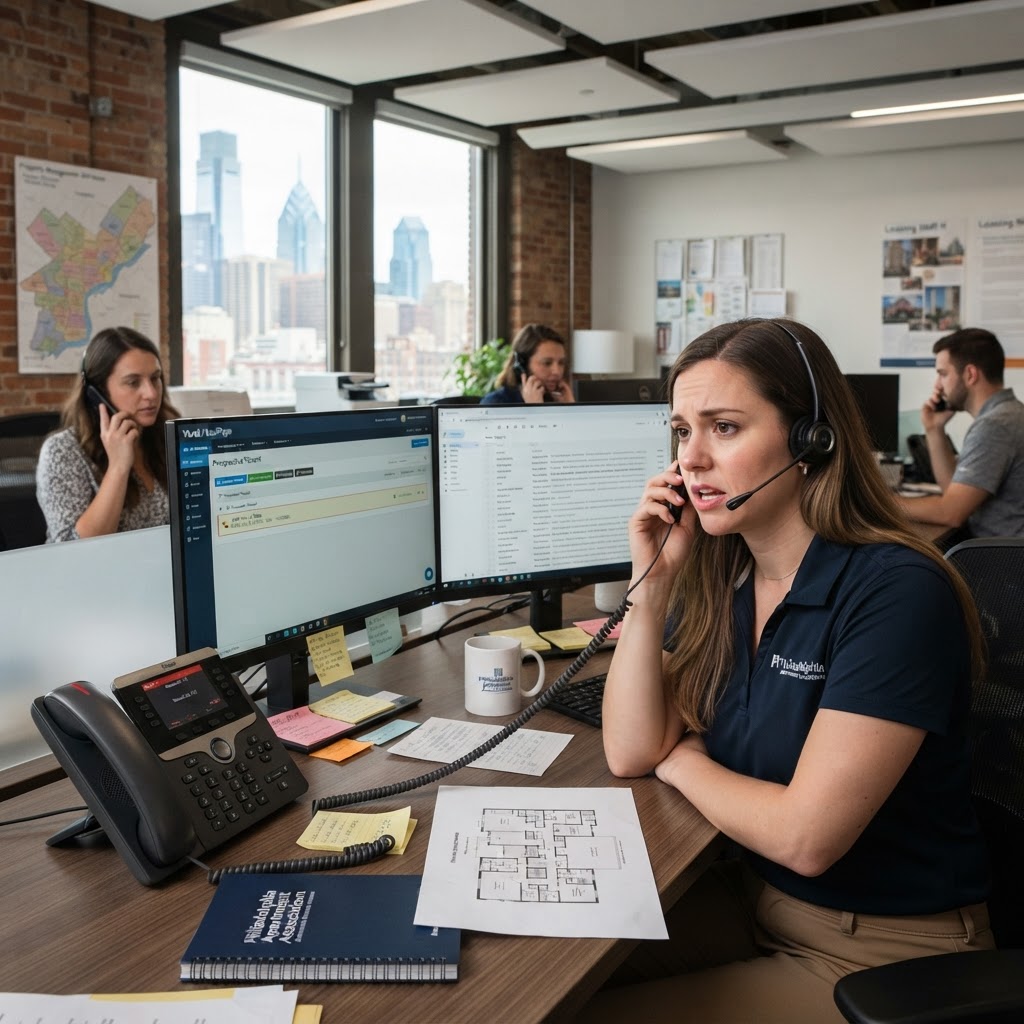
In Philadelphia’s multifamily market, the margin for error is tightening. While the Greater Philadelphia occupancy rate remained a resilient 96.7% as of mid-2025 Greater Philadelphia’s multifamily occupancy rate was 96.7% as of the second quarter of 2025, the reality on the ground in neighborhoods like Fishtown and Northern Liberties is more complex. A surge of new deliveries—over 13,000 units in 2024 alone Philadelphia welcomed a surge of new apartment units in 2024—has pushed vacancy rates in those specific submarkets as high as 20% to 24% In Northern Liberties and Fishtown, the vacancy rates were notably higher at 24% and 20%. For operators in these high-supply zones, the competition isn't just about amenities; it’s about who answers the phone first.
Industry data indicates that nearly 49% to 60% of inbound leasing calls go unanswered multifamily professionals miss 49% of all calls to their properties. In a city where the average rent hovers around $2,027 The average rent for an apartment in Philadelphia is $2,027, the financial impact of a missed connection is significant. Estimates suggest each missed leasing inquiry represents between $1,000 and $30,000 in lost rental income over the life of a lease Each missed leasing call costs property managers an average of $1,000 in lost rental income. When a prospect calling from a Comcast Center office or a University City lab hits a dead voicemail, they rarely wait. They move to the next listing.
The fundamental issue isn't just a lack of staff; it’s the lifelessness of traditional property management tools. Most systems rely on static lead forms, dead menus, and voicemails where interest goes to die. Leasing is a series of living moments—a prospect asking about pet fees for a 1-bedroom in Manayunk at 8:00 PM, or a real-time chat about parking availability near Rittenhouse Square. When software acts as a static barrier rather than a bridge, the leasing motion stalls.
Philadelphia operators are also facing rising overhead, with administrative expenses climbing 11.4% recently Administrative expenses rose 11.4%. Relying on manual busywork to move a lead from inquiry to toured is increasingly unsustainable. The goal is to make the product feel alive—ensuring every call is answered instantly and every conversation moves work through statuses the moment it happens. Instead of a lead sitting in a dead inbox until Monday morning, a responsive system carries the conversation forward, scheduling tours and answering specific local questions in real time.
In a market where concessions of up to three months’ free rent are becoming common to attract tenants concessions of up to three months’ free rent were common in supply-heavy neighborhoods, capturing every organic lead is the most cost-effective way to protect Net Operating Income. By replacing static forms with active, real-time engagement, Philadelphia property managers can ensure their leasing funnel remains fluid and responsive, regardless of the hour.
Lease Tab helps Philadelphia operators turn these silent missed calls into active leasing momentum by ensuring no prospect is left waiting.