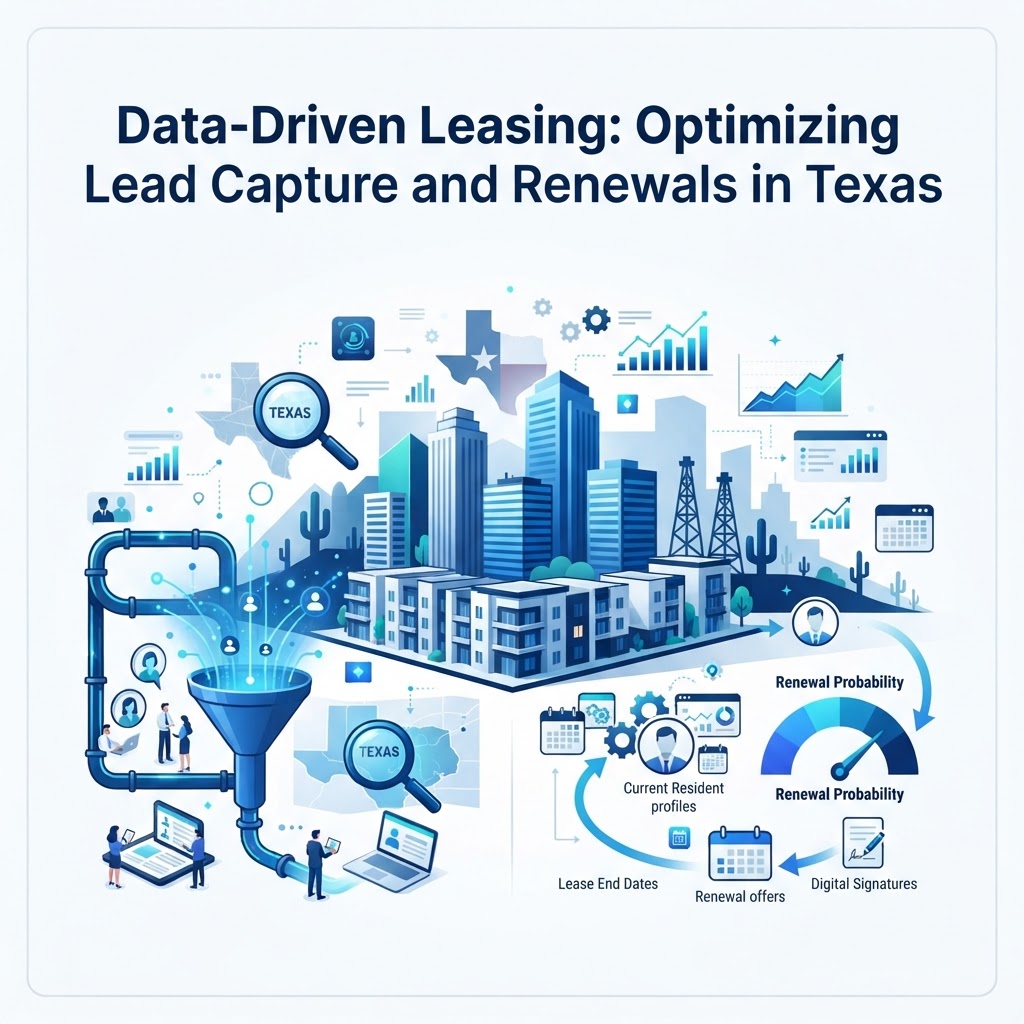
In the Texas multifamily market, the shift from a landlord’s market to a more balanced environment has put operational efficiency under a microscope. With over 100,000 new units delivered across Dallas-Fort Worth and Austin in the past 18 months, property managers are navigating increased competition and rising vacancy rates, which currently hover between 9% and 11% in major metros. In this climate, the cost of a missed lead is no longer a theoretical concern—it is a direct hit to the bottom line. Property owners are also facing rising insurance premiums and property tax assessments, making every percentage point of occupancy critical for maintaining Net Operating Income (NOI).
Industry benchmarks indicate that nearly 45% to 50% of inbound leasing inquiries go unanswered, particularly during peak hours, lunch breaks, or weekends. For a mid-sized asset, this leakage represents thousands of dollars in potential monthly revenue. When a prospective resident encounters a voicemail rather than a person or a responsive system, they rarely leave a message; they simply move to the next listing on their search. In a high-supply environment, speed-to-lead is the primary differentiator.
Streamlining the Lead Capture Funnel
Reducing manual busywork starts with lead capture. Traditional leasing offices spend upwards of 60% of their day answering repetitive questions regarding pet policies, parking availability, and utility costs. By delegating these top-of-funnel interactions to automated systems, onsite teams can reallocate their time to high-value activities, such as personalized tours and high-touch resident engagement.
Automation in this context isn't about replacing the human element; it’s about ensuring that the human element is available when it matters most. An AI leasing receptionist acts as a digital front door, handling the initial discovery phase and scheduling tours 24/7 without the latency of manual follow-up. Data shows that prospects are 2.5 times more likely to sign a lease if they can schedule a tour within the first hour of their initial inquiry. This immediacy prevents lead decay and ensures your marketing spend isn't wasted on prospects who never reach a live agent.
Renewal Automation and Retention
Efficiency gains should not stop at the move-in. The renewal process is often bogged down by manual outreach and paper-heavy workflows that distract staff from new leasing opportunities. By automating the delivery of renewal offers based on real-time market data and resident tenure, managers can reduce the friction that often leads to move-outs. In a high-supply market like Texas, retention is significantly more cost-effective than acquisition, with the average turnover costing an owner between $3,000 and $5,000 per unit when considering lost rent, cleaning, and marketing expenses.
The Operational Shift
To stay competitive, Texas operators are moving away from reactive management toward proactive, tech-enabled strategies. Integrating tools that handle the 'noisy' administrative work—like answering basic phone inquiries and managing calendar syncs—allows leasing consultants to focus on resident satisfaction and lease execution. As vacancy rates stabilize and supply continues to come online, the properties that thrive will be those that minimize response times and maximize their team’s bandwidth. Leveraging a specialized tool like Lease Tab ensures that no prospect is left waiting, allowing your onsite team to prioritize the residents standing right in front of them.